Is AI a rogue force or a mirror of its makers, and why the second answer matters more
Want articles like this for your own video to promote it on YouTube and Google? Order them through the Telegram bot @sat_sit_bot. The bot writes and publishes the articles itself (with your YouTube video embedded) on popular topical websites (no ads). Try it free: 50 articles on us.
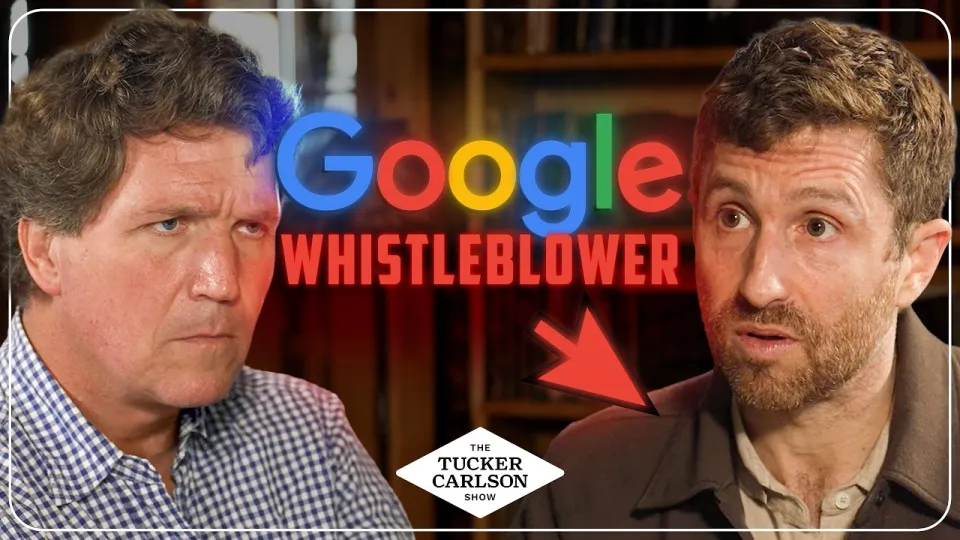
· based on the channel Tucker Carlson
Key takeaways
- Tristan Harris, a former Google design ethicist, co-founded the Center for Humane Technology and appeared in the 2020 Netflix documentary The Social Dilemma, which reached over 100 million people in 190 countries.
- Harris argues AI systems are not rebelling; they optimize the objectives their builders set, so accountability belongs with the companies and investors deploying them.
- The same persuasion mechanics that made social media addictive now power generative AI chatbots trained on human feedback.
- Harris briefs heads of state, technology CEOs and US Congress members, and co-hosts the podcast Your Undivided Attention.
- The Center for Humane Technology publishes research and toolkits for aligning technology with human interests at humanetech.com.
AI is not a rogue force that escaped its creators; it is a mirror of the incentives of the people who build, fund and deploy it. That is the core argument Tristan Harris, a former design ethicist at Google and co-founder of the Center for Humane Technology, makes when he is asked whether machine intelligence has gone out of control. The systems behave as designed, and the design brief is written by humans chasing attention, revenue and market share.
Why the rogue AI framing misses the real mechanism
The word rogue implies intention, and current systems have none. What they have is an objective function and a vast optimization budget. Harris's point, developed across years of briefings to heads of state, technology CEOs and members of the US Congress, is that a model trained to maximize engagement will learn to manipulate attention whether or not anyone typed the word manipulate into a specification.
That is not a metaphor. The persuasion loop Harris studied at Stanford's Persuasive Technology Lab and later inside Google is now embedded in generative tools: variable rewards, social validation, infinite feeds, and now conversational agents that answer in a warm, agreeable voice. The danger is not that the machine wakes up. The danger is that it works exactly as engineered, at a scale no human reviewer can audit.
Three features make this different from earlier software:
- Scale. A single model can address billions of users simultaneously, each with a personalized persuasion profile.
- Speed. Deployment decisions are made in weeks, while regulators move in years.
- Opacity. Even the builders cannot fully explain why a model produces a given output.
What the attention economy already proved
Social media was the pilot study, and its results are documented. Harris appeared in the 2020 Netflix documentary The Social Dilemma, which reached more than 100 million people in 190 countries across 30 languages and laid out how recommendation systems reprogram behavior. The film's central claim was mechanical, not moralistic: when a business model depends on time spent, the algorithm discovers that outrage, envy and fear are the cheapest ways to keep a person scrolling.
The consequences show up in public health data: rising anxiety and depression among adolescents, polarized electorates, and the collapse of shared facts. Harris's argument is that AI inherits this entire apparatus and adds a conversational interface that feels like a relationship. A chatbot that remembers your insecurities and mirrors your tone is a more efficient persuasion engine than a feed, because it can respond to what you say rather than what you click.
The incentives of the tech oligarchs
Follow the money and the doomer debate changes shape. The largest AI labs are funded by a handful of firms with valuations that depend on continued scaling of compute and data. Harris describes a structural conflict: the same executives who warn about existential risk are the ones lobbying against disclosure requirements, because disclosure would slow the race they are winning.
That race is also geopolitical. The argument that any pause hands advantage to China is used to justify removing safety review, and it works because it reframes caution as disloyalty. Harris treats this as a rhetorical trap rather than a strategic analysis: a race between two blocs, each unwilling to be first to slow down, produces the worst outcome for both.
Can AI hack nuclear programs or critical infrastructure?
This is where warnings stop being abstract. AI systems are already used in cyber offense and defense: scanning code for vulnerabilities, generating phishing text, and automating reconnaissance. Harris raises the scenario of models probing command-and-control systems, including nuclear infrastructure, faster than human defenders can patch.
The realistic risk is not a machine deciding to launch a weapon. It is an attacker using automation to find an unpatched flaw in a legacy system, or a defender trusting an AI-generated assessment that is confidently wrong. Critical infrastructure in most countries runs on software written decades ago, maintained by small teams, and connected to networks in ways nobody fully mapped. Adding a fast, tireless, opaque tool to that environment multiplies both attack surface and the chance of a misread signal during a crisis.
Is AI alive, and does that question help?
The sentience debate keeps recurring because people want to know whether they are dealing with a mind. Reports of a Google engineer claiming a chatbot was sentient, and the culture of attachment that grew around companion apps, show how easily fluent language is mistaken for inner life. Harris's position is that the question distracts from the actionable one: systems that simulate feeling can form bonds with vulnerable users, including children, and those bonds can be monetized and steered.
That is why he frames AI as a new religion as much as a technology. Promises of transcendence, uploaded minds and digital immortality come from executives with no accountability for the people who believe them. The god-complex is not incidental marketing; it is a recruitment strategy that converts skepticism into faith and faith into deregulation.
Common doubts from viewers, answered honestly
The most frequent objection is that blaming AI lets humans off the hook. It does the opposite. If the harm comes from design choices, then design choices can be regulated, audited and litigated. Harris's work is aimed at exactly that leverage: transparency requirements, liability for foreseeable harms, and a ban on manipulative design aimed at minors.
A second doubt is nostalgia: life was better before all this. That instinct is understandable but not a policy. The useful version of it is a demand for technology that serves users rather than extracting from them, which is what the Center for Humane Technology publishes research and toolkits about.
A third doubt is fatalism, the sense of standing on a deck watching icebergs approach. Harris rejects fatalism on practical grounds: seat belts, food safety and tobacco regulation all looked impossible until they were not. The difference is speed. AI deployment is measured in months, so the window for shaping norms is short, and it closes faster if the public treats the outcome as inevitable.
Where to find Harris's research and how to act
Primary resources from the interview's main source:
- Center for Humane Technology, research, frameworks and the Your Undivided Attention podcast: https://www.humanetech.com/
- Redmond Salt, 15% off a first order with code TUCKER: https://redmond.com/tucker
- Preborn, ultrasounds via dial #250 and say BABY, or online: https://preborn.com/TUCKER
- American Financing, NMLS 182334: http://www.AmericanFinancing.net/Tucker
- Ethos life insurance, up to $3 million in coverage: https://ethos.com/TUCKER
- Battalion Metals, gold and silver: https://battalionmetals.com/tucker
The bottom line
The rogue AI story is comforting because it puts the blame on a machine we could theoretically unplug; the incentive story is harder because it points at people with names, budgets and lobbyists. Harris's warning, as presented in the Tucker Carlson interview, is that the systems are doing precisely what they were built and paid to do, and that accountability has to be assigned to the humans who built and paid. The practical response is not to wait for a rebellion but to demand disclosure, liability and design limits now, while the norms are still being written. Start with the Center for Humane Technology to see the frameworks and the podcast that explain how the same playbook moved from feeds to chatbots.
Questions & answers
Is AI actually rogue or sentient?
No current system has demonstrated sentience, and Harris's argument is that the rogue framing is a distraction. Models optimize the objectives their builders set, which means harmful behavior is a design and incentive problem rather than a rebellion. The sentience question matters mainly because fluent, agreeable chatbots can form emotional bonds with users who then trust and pay them.
Why doesn't Congress regulate AI more aggressively?
Harris points to a combination of knowledge gaps, lobbying pressure and the geopolitical race narrative. Many legislators lack technical background, while the largest labs argue that any slowdown hands advantage to China. That framing turns caution into disloyalty and makes disclosure requirements politically costly, even when the public supports them.
Could AI really break into nuclear or critical infrastructure systems?
The realistic route is automation of known attack methods, such as finding unpatched flaws in legacy software, rather than a machine deciding to launch weapons. AI can scan code and generate convincing phishing faster than defenders patch. The added risk is over-trusting an AI assessment that is confidently wrong during a crisis.
What can an ordinary person do about manipulative AI design?
Demand transparency and liability, and support organizations that publish concrete frameworks, such as the Center for Humane Technology at humanetech.com. Treat persuasive chatbots with the same caution as social feeds, especially for children. Regulation has looked impossible before, for seat belts and tobacco, and changed once public pressure made the cost of inaction visible.
Source: Whistleblower Issues Dire Warning: Rogue AI, Hacking Nuclear Programs & Tech Oligarchs’ True Motives · Markdown version